
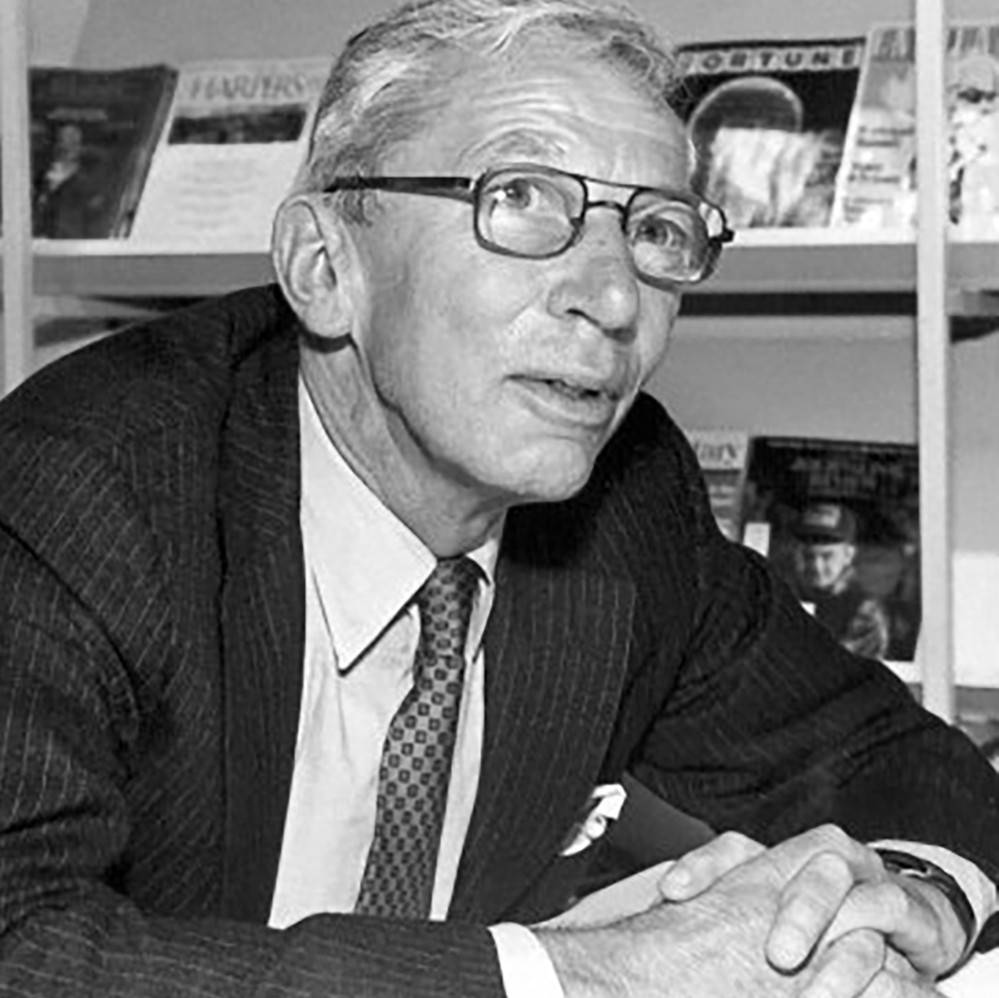
Edward C. Banfield (1916–1999) was a great social scientist. He was most widely known for his studies of American cities, but he also published remarkable books on politics, policymaking, and other topics.
Not terribly long ago, AEI Press republished Banfield’s first book, Government Project, which examined the rise and fall of a well-intended, well-resourced effort to alleviate rural poverty during the New Deal.
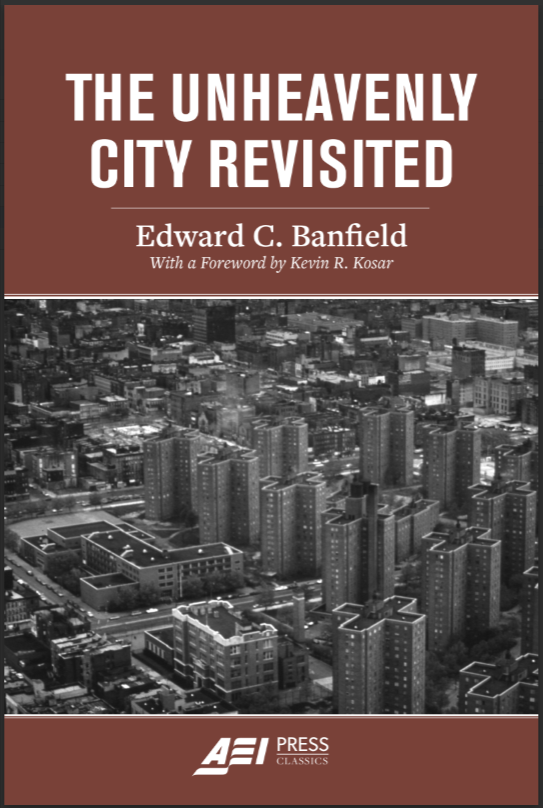
That book received a good deal of attention, so we decided to revive another great Banfield book, The Unheavenly City Revisited. The book compiles a ton of empirical evidence about America’s cities to lay out the facts about urban life. Contrary to the claims of those decrying rising crime, poverty, and general awfulness, city life improved over the past century. Many of the purported problems are either hassles or eternal features of metropolitan life.
The sheer contrarianism of Banfield’s thesis and his impressive marshaling of scholarship alone make this book worth reading.
But let me give you four additional reasons you should read it.
First, Banfield was a terrific writer who knew how to grab readers’ attention and keep them engaged. Consider the first few sentences of The Unheavenly City:
This book will probably strike many readers as the work of an ill-tempered and mean-spirited fellow. I would not mind that especially if I did not think that it might prevent them from taking its argument as seriously as they should. I should like therefore to assure the reader that I am as well-meaning—probably even as soft-hearted—as he. But facts are facts, however unpleasant, and they have to be faced unblinkingly by anyone who really wants to improve matters in the cities.
Second, the book reminds us that hostility to free thinking and expression is a perennial peril. After Ed first published The Unheavenly City in 1970, he was canceled. Radical students invaded his class and disrupted his lectures. He was shunned on campus and stalked by a student. Various academics criticized him in print and at conferences because he had contradicted a tenet of their intellectual faith: that more federal spending can fix the problems of America’s cities. The Unheavenly City was loaded with facts and citations, yet the intellectuals’ conversation around the book rarely engaged his research.
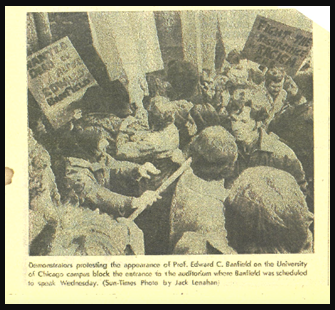
Ed reworked the book and republished it as The Unheavenly City Revisited in 1974 to respond to the criticism. He tried to engage his critics in critical dialogue. He added more facts and additional text to further clarify his already bell-clear findings. Again, sane discussion of the book and its findings was rare. Many of society’s leading lights simply did not want to hear what Ed had to say.
Third, AEI republished this book because it holds timeless wisdom about an array of urban policy topics—crime, housing, unemployment, and more. And we humans have an unfortunate habit of forgetting what previous generations have learned. In the past 10 years, I have watched with dismay as various politicians, smarties, and online influencers have announced bold new ideas for making cities better that are little more than bad ideas reformers attempted in the 1950s, ’60s, and ’70s. It is painful to watch, and it is such a waste of our resources. “Those who cannot remember the past are condemned to repeat it,” George Santayana warned us more than a century ago. Yet here we are again. My hope is that bringing this book back into print and getting it discussed might help policymakers avoid repeating even more errors.
Fourth, Banfield’s analysis of urban and American politics feels especially relevant at this moment in history. And that is because he puts social class at the center of his analysis.
Here in America, we believe that “all men are created equal,” yet that does not mean we are homogeneous. Like every society, we have different classes with often very different perspectives, ways of life, and behaviors. This fact has many ramifications for policymaking.
A very big ramification is this: Putting class at the center of thinking about politics and policy reminds us of a too-often-forgotten truth—elites tend to dominate policymaking and the dialogues about America’s social and other problems.
And like any other class, elites have their own biases. They tend to be affluent relative to the rest of the country and to have very high expectations for how life ought to be. Hence, they tend to see problems everywhere and relentlessly conjure ideas about how to fix them. These elites frequently are overly optimistic that government interventions will work, and they often insist that even if their attempts fail, there is nobility in the act of trying.
In this book, Ed Banfield called them out for these and other biases. No, the average American does not see the same problems as elites see. No, the average American is not so confident that government action will succeed. No, the average American does not feel relief from guilt when they see money spent on government programs that fail.
Indeed, a central class-based lament of The Unheavenly City Revisited is that America’s politics were headed in an unhealthy direction.
As society grew wealthier, ever more college-educated individuals were taking an interest in politics and lending their voices and resources to goad the government to tackle ever more problems—with little consideration of whether the problems could be solved and whether government could solve them. Banfield prophetically wrote:
If we look toward the future, it is impossible not to be apprehensive. The frightening fact is that large numbers of persons are being rapidly assimilated to the upper classes and are coming to have incomes—time as well as money—that permit them to indulge their taste for “service” and doing good in political action. Television, even more than the newspapers, tends to turn the discussion of public policy issues into a branch of the mass entertainment industry. Doing good is becoming—has already become—a growth industry, like the other forms of mass entertainment, while righteous indignation and uncompromising allegiance to principle are becoming the motives of political commitment. This is the way it is in the affluent, middle-class society. How will it be in the super-affluent, upper-middle-class one?
Many promises would be made, yet few of the proclaimed problems would be solved, which would sow cynicism in the public and foment angry politics. The average American would rage at the elites, while the political elites, for their part, would talk among themselves, often with bafflement at the complaints coming at them.
I could enumerate additional reasons why you should read this book, but I will leave my limited case here. I hope you are persuaded to get a copy of the book. Copies are available online for $15.
Kevin R. Kosar (@kevinrkosar) is a senior fellow at the American Enterprise Institute and wrote new prefaces for Edward C. Banfield’s Government Project and The Unheavenly City Revisited.

